

When you’re exploring fertility treatments, it’s easy to feel overwhelmed by the terms, tests, and timelines. If you’re considering In Vitro Fertilisation (IVF), you’re not alone. Thousands of couples across India turn to IVF every year to grow their families. Whether you’re at the beginning of your journey or already talking to a fertility doctor in Mumbai, understanding how IVF works can make all the difference.
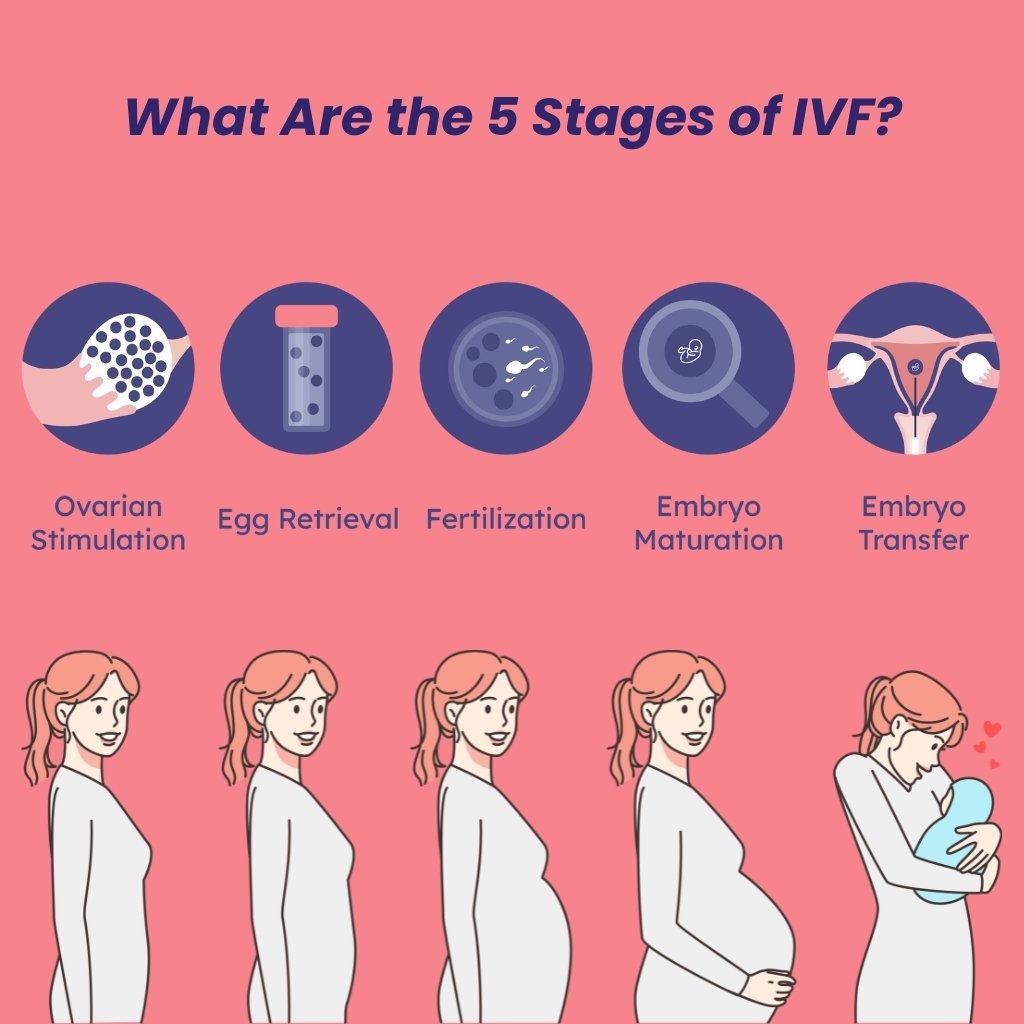
You might be wondering, what are the 5 stages of IVF? It’s important to know that IVF isn’t a single event. It happens in five distinct stages, each one playing a crucial role in the process. From ovarian stimulation and egg retrieval to fertilisation, embryo transfer, and the final wait each stage carries its own rhythm, decisions, and emotions.
Knowing what are the 5 stages of IVF not only prepares you mentally and emotionally, but it also helps you communicate better with your healthcare provider and feel more in control. Let’s gently break down these steps so you can walk this journey with clarity and confidence
What Does IVF Actually Mean?
The IVF full form is In Vitro Fertilisation. It literally means “fertilisation in glass,” but in today’s medical practice, it refers to fertilising an egg with sperm outside the body in a lab setting.
Here’s the simplest way to explain the concept of IVF:
- A woman’s ovaries are stimulated to produce multiple eggs
- The eggs are collected and fertilised with sperm in a laboratory
- The best quality embryos are selected
- One or more embryos are transferred into the uterus
- A pregnancy test follows after about two weeks
People often confuse IVF with a single treatment. In truth, it’s a structured process that takes time and planning. This is where the five main stages come in.
When and How Is Pregnancy Confirmed After IVF?
After the embryo is transferred during the final stage of IVF, there’s a waiting period of about two weeks before pregnancy can be confirmed. This stage is often emotionally intense, as hopeful parents look for early signs.
Although you may be tempted to take a home pregnancy test, fertility specialists usually recommend waiting for a blood test. The reason is simple: medications used during IVF can affect hormone levels and lead to misleading results.
Here’s how pregnancy is confirmed:
- A blood test called Beta hCG is done around 10 to 14 days after the embryo transfer
- If the hCG level is high enough, it suggests that the embryo has implanted successfully
- A second test may be done after two or three days to confirm that levels are rising as expected
- A follow-up ultrasound is often scheduled after a few weeks to confirm the presence of a gestational sac and heartbeat
This medical confirmation is more reliable than any over-the-counter test and is part of routine IVF procedure step by step care.
IVF Step-by-Step: A Simple Look at the 5 Main Stages
Before we explore each stage in detail, here’s a quick list of what the stages of IVF procedure usually involve:
- Ovarian stimulation
- Egg retrieval
- Fertilisation
- Embryo transfer
- Pregnancy test and the two-week wait
Let’s look at what really happens during each phase.
Stage 1 – Ovarian Stimulation (Prepping the Body)
This stage marks the beginning of the actual treatment. Here, fertility specialists aim to stimulate your ovaries to produce more than one egg. More eggs increase the chances of getting healthy embryos.
You’ll be given hormonal medications in the form of daily injections. The purpose is to encourage your body to grow multiple follicles instead of the usual one egg per cycle.
You might wonder, ivf injections, how many days do they last? Typically, the injection phase runs for about 8 to 12 days.
What you should know:
- Regular ultrasounds will monitor follicle growth
- Blood tests will check hormone levels
- The dosage can be adjusted depending on your response
- You may feel bloated, mildly crampy, or tired
The goal here is to collect enough mature eggs to proceed with fertilisation. It’s a balancing act that your doctor manages with close supervision.
Stage 2 – Egg Retrieval (Follicles to Freezers)
Once your follicles are mature, you’ll be scheduled for the egg collection procedure. This is done in a clinical setting and usually doesn’t take more than 20 to 30 minutes.
You’ll be under light sedation so you won’t feel pain. A small ultrasound-guided needle is used to extract eggs from the ovaries.
Important points to keep in mind:
- It’s a day-care procedure; you can go home the same day
- You might feel slight discomfort or fatigue afterward
- The number of eggs retrieved varies for each person
The eggs are then examined in the lab, and the mature ones are kept for fertilisation. This leads to the next step.
Stage 3 – Fertilisation (Where Science Takes Over)
This is where the in vitro part actually happens. The mature eggs are placed in a petri dish and fertilised with sperm either by direct mixing or through a method called ICSI (Intracytoplasmic Sperm Injection), depending on the sperm quality.
Fertilisation doesn’t mean pregnancy just yet. Over the next 3 to 5 days, these fertilised eggs develop into embryos.
Here’s what happens during this stage:
- Not all eggs will fertilise successfully
- Embryologists monitor growth daily
- The best embryos are selected for transfer
At this point, you’ll get updates on how many embryos have developed. Some couples choose to freeze extra embryos for future use.
Stage 4 – Embryo Transfer (Putting Life Back In)
This is one of the most awaited parts of the stages of ivf. The embryo transfer is a simple and painless procedure. The highest quality embryo is selected and transferred into the uterus using a thin catheter.
You might hear terms like “day 3 transfer” or “day 5 transfer.” These refer to how many days after fertilisation the embryo has been growing before it’s placed back.
What you need to know:
- No anaesthesia is needed
- The procedure takes about 10 to 15 minutes
- You’ll rest for a short while at the clinic
- You can usually resume normal activities afterward
Only one or two embryos are usually transferred to reduce the risk of multiple pregnancies.
Stage 5 – The Two-Week Wait and Pregnancy Test
After the transfer, you enter the most emotionally charged part of IVF- the waiting period. It usually lasts 12 to 14 days before a pregnancy blood test is done.
During this time, your body is either accepting the embryo or not. You’ll likely be on progesterone supplements to support the uterine lining.
Common experiences:
- Cramping, spotting, mood swings – all completely normal
- Avoid self-testing with pregnancy kits; wait for your scheduled test
- It’s emotionally intense; lean on your support system
Once your test is done, your fertility centre will guide you through next steps whether it’s a confirmed pregnancy or the need for another cycle.
Who Might Benefit from IVF?

IVF is often recommended when other methods of trying to conceive haven’t worked. It’s not just for couples who have been trying for years, but also for those with specific medical conditions that make natural conception more difficult.
Here are some of the most common reasons people choose IVF:
- Blocked or damaged fallopian tubes
- Male fertility issues such as low sperm count or poor sperm movement
- Women with ovulation problems or hormonal imbalances
- Endometriosis or uterine issues
- Unexplained infertility where no cause is found despite testing
- Age-related fertility decline, especially in women over 35
- People looking to preserve fertility before cancer treatment
- Same-sex couples or single individuals who want to have a biological child
In many cases, a fertility doctor in Mumbai or other specialists may suggest IVF when simpler treatments like medication or intrauterine insemination haven’t led to success.
How Long Does the IVF Process Take in Total?
From the first hormone injection to the pregnancy test, an IVF cycle in India usually takes between 4 to 6 weeks. Here’s a general idea:
- Ovarian stimulation: 8 to 12 days
- Egg retrieval: Done around day 13 to 15
- Embryo transfer: Done between day 17 to 20
- Pregnancy test: Day 28 to 30
Timeframes may shift based on your body’s response and your clinic’s approach.
What Is the Cost of IVF in India
IVF costs can vary widely across cities and clinics. On average, a full IVF cycle in India may range between ₹1.2 lakh to ₹2.5 lakh. Some clinics charge additional fees for medication, embryo freezing, or advanced techniques.
Here’s an approximate cost breakdown for each stage:
- Ovarian stimulation and medications: ₹50,000 to ₹80,000
- Egg retrieval and lab work: ₹30,000 to ₹50,000
- Embryo culture and fertilisation: ₹25,000 to ₹40,000
- Embryo transfer: ₹15,000 to ₹30,000
- Blood tests and consultations: ₹5,000 to ₹10,000
These figures are average estimates. Some IVF centres in Mumbai, for example, offer packages that bundle costs or add personalised care.
Finding the Right IVF Centre in Mumbai (And Who to Talk To)
If you’re in Mumbai, there are many options to explore. But what matters most is choosing a centre with experienced specialists, transparent pricing, and a good success rate.
Here are a few names that couples often turn to:
- Dr Shilpa, known for her expertise in female fertility issues
- Women Care Hospital, offering personalised IVF packages
- Harleys Cosmetic and Women’s Clinic, trusted for both cosmetic and reproductive care
- You can also search for a nearby ivf centre in mumbai and check reviews before booking a consultation
Take time to visit, ask questions, and feel comfortable before committing.
What Are the Risks and Potential Complications of IVF?
IVF is generally safe, especially when done under the care of a skilled fertility doctor in Mumbai or a trusted fertility team. Still, like any medical treatment, it does come with some potential risks.
Here are a few that patients are informed about before starting the process:
- Ovarian hyperstimulation syndrome (OHSS): This occurs when the ovaries react too strongly to fertility injections. Symptoms can include bloating, nausea, and discomfort. In rare cases, it may require medical attention.
- Multiple pregnancy: Transferring more than one embryo increases the chance of twins or triplets. While this can be joyful, it also carries a higher chance of preterm birth or delivery complications.
- Ectopic pregnancy: This happens when the embryo implants outside the uterus, typically in the fallopian tube. It requires prompt treatment.
- Emotional stress: The process can be emotionally and mentally demanding, especially if more than one cycle is needed.
- Medication side effects: Some people experience fatigue, mood changes or abdominal pain from hormonal treatments.
Most IVF clinics, such as Women Care Hospital and Harleys Cosmetic and Women’s Clinic, carefully manage these risks through regular check-ups, clear communication, and tailored care plans.
Frequently Asked Questions
Q1: How painful is IVF treatment?
Answer: Most of the IVF process is not painful. The injections may cause mild discomfort. Egg retrieval is done under sedation, and embryo transfer feels like a regular pelvic exam.
Q2: Is IVF 100 percent successful?
Answer: No. IVF success depends on age, fertility history, embryo quality, and clinic expertise. For women under 35, success rates are around 40 to 50 percent per cycle.
Q3: What is the success rate of IVF in India?
Answer: On average, IVF success rates in India range from 30 to 50 percent per cycle, depending on various factors.
Q4: Do IVF babies have health issues?
Answer: IVF babies are as healthy as naturally conceived babies. There is no increase in major health risks based on current evidence.
Q5: How many injections are needed in IVF?
Answer: You may need around 8 to 12 injections during the ovarian stimulation stage. Some hormone support continues even after embryo transfer.
Q6: Can I do IVF at age 40?
Answer: Yes, but the success rate declines with age. Women over 40 may need additional techniques like donor eggs or extended monitoring.
Q7: What should I avoid during the IVF process?
Answer: Avoid smoking, alcohol, caffeine in high amounts, and heavy physical exertion. Always follow your doctor’s instructions.
Q8: What are the chances of twins with IVF?
Answer: If two embryos are transferred, the chance of twins increases. Your doctor will guide you on whether one or two embryos are ideal.
Q9: Does IVF need bed rest after embryo transfer?
Answer: Strict bed rest is not usually needed. Light movement is encouraged. However, rest on the day of the transfer is often recommended.
Q10: What if IVF fails the first time?
Answer: If it doesn’t work the first time, doctors may review the cycle and adjust the protocol. Many couples conceive on the second or third attempt.
Conclusion
IVF is a medical procedure, but it’s also a personal decision shaped by emotion, timing, and trust. Whether you’re just starting or already consulting a fertility doctor in Mumbai, knowing what the 5 stages of IVF involve gives you more than information. It gives you confidence.
IVF is not a one-size-fits-all process. Your experience might look slightly different from someone else’s, and that’s perfectly okay. The important thing is to stay informed, ask your doctors the right questions, and take it one step at a time.
Whether you’re just starting to look into IVF or already in the middle of treatment, remember that support is available. Clinics like Harleys Cosmetic and Women’s Clinic in Mumbai offer personalised care that helps you feel heard and understood.
Your next step? Book a consultation or simply talk to a professional like Dr. Shilpa who can guide you through your choices. IVF is a medical journey, yes but it’s also a personal one.