

Introduction
For couples struggling with conception in Mumbai, modern fertility treatments offer renewed hope. Among the most recommended options are IUI and IVF, two widely used assisted reproductive technologies. While both aim to support conception, each has distinct procedures, success rates, costs, and suitability based on personal health profiles.
Understanding the comparison of IUI vs IVF in Mumbai is vital before choosing the path that aligns with your medical history, age, fertility goals, and emotional readiness. Clinics like Harleys Women’s Clinic, led by Dr. Shilpa, offer both options with advanced diagnostics and personalised care. However, the decision between the two is often confusing for many.
In this guide, we simplify the technicalities, bust myths, explain processes, and highlight benefits and limitations all explained in simple terms to help you make an informed decision. Whether you’re visiting a fertility clinic in Mumbai for the first time or researching after a failed cycle, this article is designed to guide you every step of the way.
Understanding the Basics: IVF and IUI
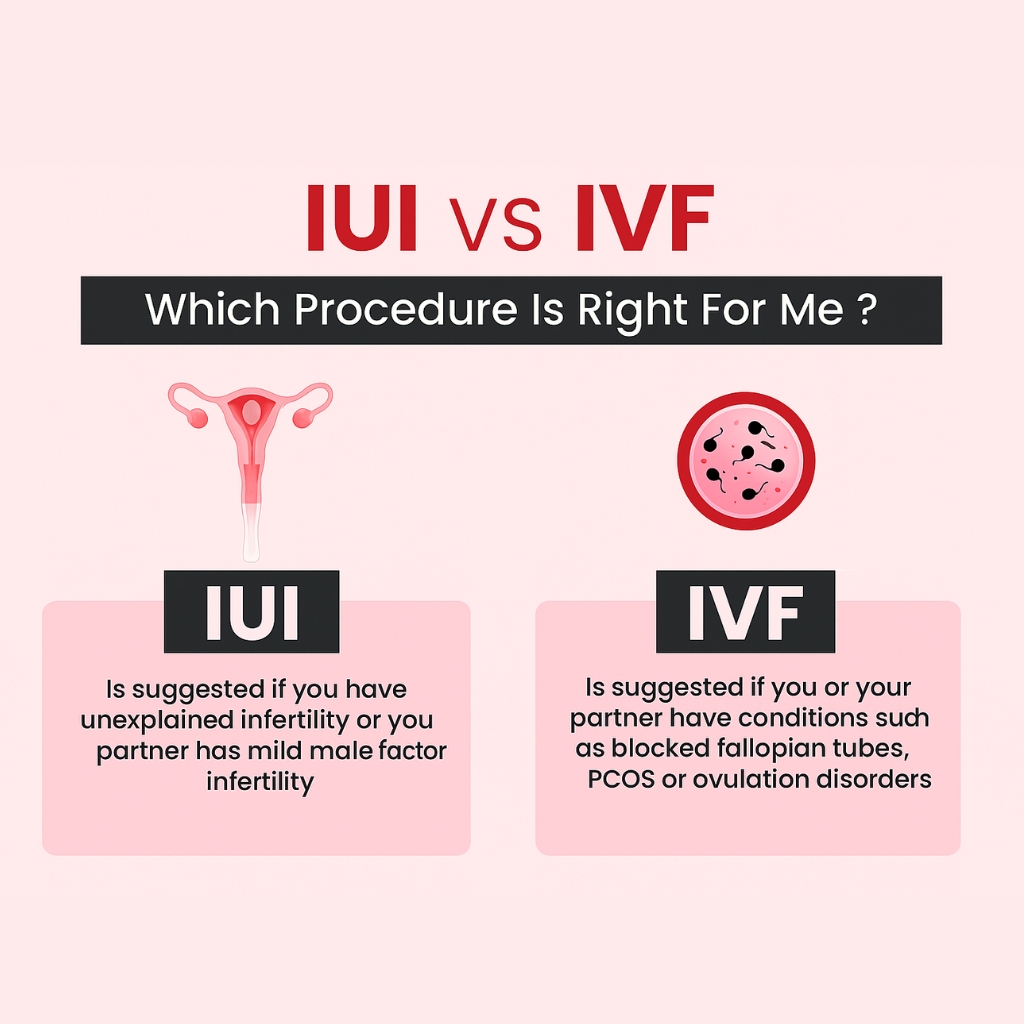
Intrauterine Insemination (IUI) involves placing washed and concentrated sperm directly into the uterus around the time of ovulation. It’s often used in cases of mild male infertility, unexplained infertility, or ovulation issues.
In Vitro Fertilisation (IVF), on the other hand, involves stimulating the ovaries to produce eggs, retrieving them, fertilising them in a lab, and then transferring a healthy embryo into the uterus.
Both methods support conception but differ in complexity, success rates, invasiveness, and cost.
The IUI Process Explained
- Initial consultation with a fertility specialist
- Ovulation tracking using ultrasound or blood tests
- Sperm preparation and washing
- Insemination procedure in a clinic setting
- Post-procedure observation and follow-up
Advantages of IUI:
- Less invasive and simpler
- Lower cost compared to IVF
- Requires minimal medication
- Can be done without anaesthesia
- Useful for unexplained infertility or mild male issues
The IVF Process Explained
- Ovarian stimulation using fertility injections
- Egg retrieval under sedation
- Fertilisation in lab using partner’s or donor sperm
- Embryo culture and observation for several days
- Embryo transfer into uterus
- Pregnancy testing after two weeks
Advantages of IVF:
- Higher success rate per cycle
- Can overcome complex fertility issues (blocked tubes, poor sperm, endometriosis)
- Embryos can be genetically tested
- Frozen embryo transfer is possible
- Donor eggs/sperm or surrogacy options available
Key Differences Between IVF and IUI
| Feature | IUI | IVF |
| Complexity | Simple | Advanced |
| Procedure Location | In-clinic, no sedation | Operating theatre with sedation |
| Cost | Lower | Higher |
| Success Rate | Lower per cycle | Higher per cycle |
| Use Cases | Mild infertility | Complex infertility cases |
| Time Commitment | Less time-consuming | Requires multiple appointments |
| Hormonal Medication | Minimal | Intensive |
Understanding these differences helps in setting realistic expectations and emotional preparedness.
Pros and Cons of IVF & IUI
IUI Pros:
- Affordable
- Quick recovery
- Minimal medications
- Less emotionally draining (for some)
IUI Cons:
- Lower success rate
- Not suitable for severe infertility
IVF Pros:
- High success potential
- Suitable for wide range of fertility problems
- Option for embryo freezing and genetic testing
IVF Cons:
- Expensive
- Physically and emotionally demanding
- Risks from hormonal medication
Factors to Consider When Choosing
- Age of the woman – IVF often recommended for women over 35
- Fertility diagnosis – Tubal issues or endometriosis may favour IVF
- Previous failed attempts – IVF is preferred after 3-6 IUI cycles without success
- Male factor infertility – IVF with ICSI may be more effective
- Emotional resilience – IVF is more intensive
- Financial situation – IUI may be more accessible
A thorough consultation with a fertility specialist helps you decide what’s best based on medical reports.
Role of the Fertility Specialist

A qualified fertility specialist guides you through investigations, personal history, and medical reports before recommending treatment. Clinics like Harleys Women’s Clinic, led by Dr. Shilpa, offer diagnostics, imaging, semen analysis, hormone testing, and uterine evaluation.
A good clinic also supports mental health, provides transparency about pricing, and sets realistic expectations regarding success rates.
Myths and Facts
Myth: IVF guarantees pregnancy
Fact: Even IVF has a success range of 30-60% depending on age and other factors
Myth: IUI works for everyone
Fact: Not suitable for blocked tubes or severe sperm issues
Myth: IVF babies are less healthy
Fact: IVF babies are as healthy as naturally conceived ones
Myth: Only older women need fertility treatment
Fact: Younger women with PCOS, endometriosis, or partners with low sperm count may also need help
Myth: Treatment always involves twins or triplets
Fact: With single embryo transfer protocols, this is rare now
Choosing the Right Fertility Clinic in Mumbai
Selecting a fertility clinic in Mumbai involves more than just looking at success rates. Look for:
- Experienced gynaecologists like Dr. Shilpa
- Modern infrastructure and lab facilities
- Transparent cost structure
- Counselling and emotional support
- Clear communication and follow-up
Harleys Women’s Clinic is one of the trusted names for fertility care in Mumbai, offering both IUI and IVF with a personal touch.
Cost Comparison in Mumbai
- Average IUI Cost: ₹8,000 – ₹15,000 per cycle
- Average IVF Cost: ₹1.2 lakh – ₹2.5 lakh per cycle
Costs may vary depending on medications, diagnostic procedures, lab charges, and additional services like embryo freezing or donor services.
Long-Term Considerations
- IVF might be a better long-term option for couples planning multiple children
- IUI may be repeated a few times before moving to IVF
- Financial planning is essential for IVF due to higher costs
- Consider insurance, financing options, or treatment package deals
- Lifestyle changes, weight management, and managing stress improve treatment outcomes
Conclusion
Deciding between IUI vs IVF in Mumbai is deeply personal and medical. Both options are valid and effective, depending on your health profile and fertility history. With proper guidance from a trusted fertility clinic in Mumbai, you can move forward with confidence.
Don’t rush the decision. Gather information, ask questions, and consult with experts like Dr. Shilpa at Harleys Women’s Clinic. What matters most is choosing the path that gives you the best chance at building your family safely and with peace of mind.
FAQs
Q1. How do I know if IUI or IVF is better for me?
Answer: A consultation with a fertility specialist and test results will help determine the right approach.
Q2. Can I start with IUI before trying IVF?
Answer: Yes, especially if you’re under 35 and have mild fertility issues. Many doctors recommend starting with IUI.
Q3. What are the success rates of IUI and IVF in Mumbai?
Answer: IUI success ranges from 10-20% per cycle, while IVF ranges from 30-60%, depending on age and other factors.
Q4. Does IVF involve surgery or hospital stay?
Answer: No hospital stay is required. Egg retrieval is done under sedation, and you go home the same day.
Q5. Are IUI and IVF painful?
Answer: Both procedures are generally well tolerated. IVF involves minor discomfort during egg retrieval, while IUI is similar to a Pap smear.
Q6. Is fertility treatment available on EMI or insurance?
Answer: Some clinics offer EMI or packages. Limited insurance plans in India cover fertility treatments check with your provider.
Q7. How many cycles of IUI before switching to IVF?
Answer: If pregnancy doesn’t occur after 3-6 IUI cycles, most specialists suggest considering IVF.
Q8. Can I freeze my eggs if I’m not ready yet?
Answer: Yes, egg freezing is an option with IVF clinics and suitable for women delaying parenthood.