

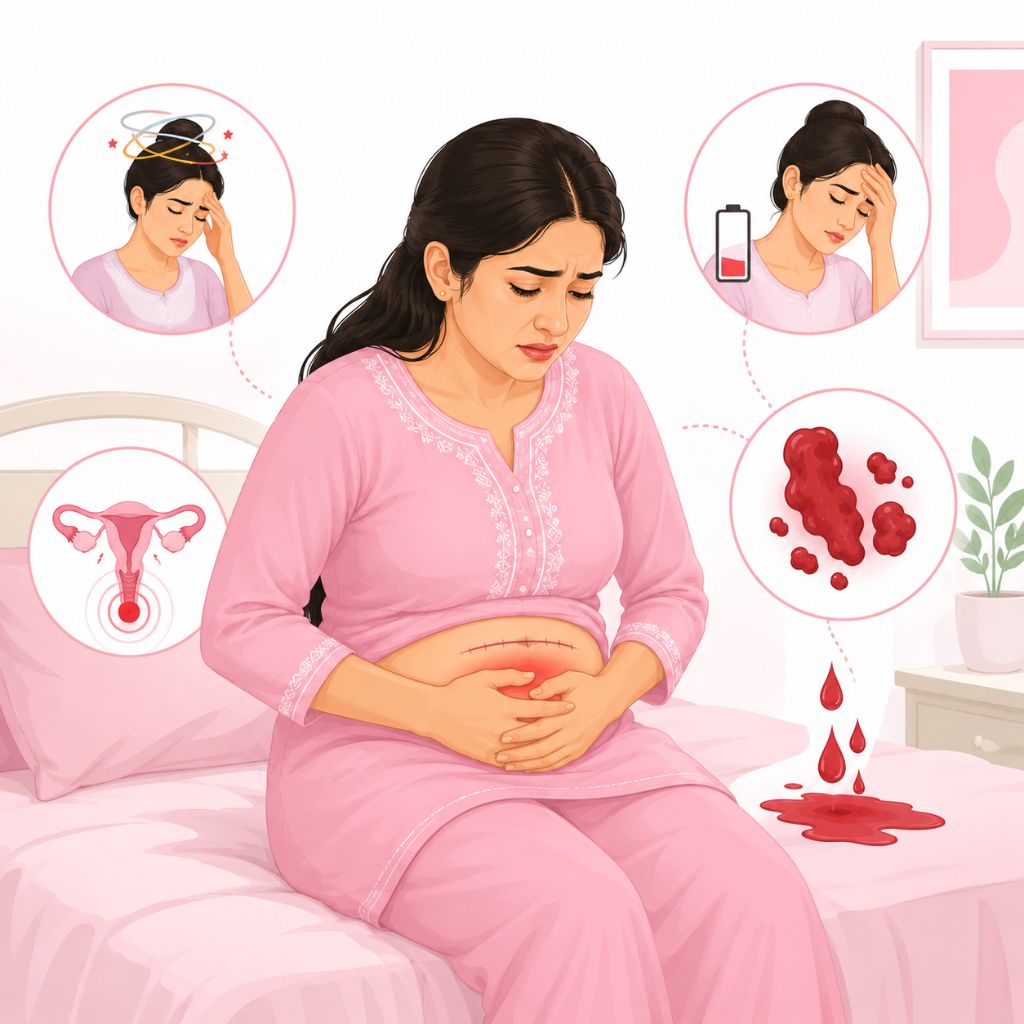
Experiencing bleeding after childbirth can feel worrying, especially after a caesarean delivery. In most women, some degree of postpartum bleeding after c section is completely normal and forms part of the body’s natural healing process. This bleeding, known as lochia after cesarean, usually changes gradually over several weeks.
However, heavy bleeding after cesarean may sometimes indicate a medical issue such as infection, retained placental tissue, or poor uterine contraction. Understanding what is normal and what is not can help women feel more reassured during recovery.
While many cases improve with rest and postpartum care, certain symptoms require prompt medical attention. Knowing the warning signs can help protect maternal health and support a smoother recovery after childbirth.
Is Heavy Bleeding After a Cesarean Normal?
After delivery, the uterus sheds blood, mucus, and tissue as it heals. This discharge is called lochia. Even after a C-section, vaginal bleeding occurs because the postpartum uterus still needs to clear remaining tissue and blood.
Normal bleeding usually follows this pattern:
- Bright red bleeding during the first few days
- Pinkish or brown discharge after one to two weeks
- Yellowish-white discharge before stopping completely
For most women, bleeding gradually reduces within 4–6 weeks. Mild cramping and small blood clots after a C-section can also occur during uterine contraction.
Abnormal bleeding after a C-section may include very heavy flow, soaking sanitary pads rapidly, passing large clots, or bleeding that suddenly becomes heavier after improving. This may signal secondary postpartum haemorrhage or another complication needing medical evaluation.
Common Causes of Heavy Bleeding After Cesarean
Secondary Postpartum Haemorrhage
Secondary postpartum haemorrhage refers to excessive bleeding occurring between 24 hours and 12 weeks after childbirth. It may happen due to infection, retained tissue, or delayed healing inside the uterus.
Symptoms can include sudden heavy vaginal bleeding, pelvic pain, dizziness, and weakness. Women with pregnancy complications or previous postpartum haemorrhage after cesarean may have a higher risk.
Immediate medical care is important if bleeding becomes severe.
Retained Placental Tissue
Small pieces of placenta can occasionally remain inside the uterus after delivery. These tissues prevent proper healing and interfere with uterine contraction.
Common retained placenta symptoms include prolonged heavy bleeding, foul-smelling discharge, fever, and abdominal discomfort.
An ultrasound is often used to confirm the diagnosis. Early treatment helps avoid infection and excessive blood loss.
Uterine Infection
A uterine infection after a C-section may develop when bacteria enter the uterus during or after delivery. Infection can irritate the uterine lining and increase postpartum bleeding.
Women may notice fever, pelvic pain, fatigue, bad-smelling discharge, or worsening bleeding after initial improvement.
Poor Uterine Contraction
After childbirth, the uterus contracts to reduce bleeding and return to its normal size. Weak contractions may lead to increased blood loss.
This condition is more common after prolonged labour, multiple pregnancies, or large babies. Heavy bleeding accompanied by abdominal tenderness should be assessed by a gynaecologist.
Hormonal Changes
Hormonal fluctuations after pregnancy can affect bleeding patterns. Breastfeeding often delays ovulation and changes the menstrual cycle, leading to irregular spotting or lighter bleeding.
In some women, hormonal shifts may contribute to heavy periods after a C-section once menstruation resumes.
Resuming Menstrual Cycles
Periods after childbirth may feel different from pre-pregnancy cycles. Some women experience heavier flow, stronger cramps, or irregular timing during the first few months.
These menstrual changes after a C-section are often temporary, although persistent heavy bleeding should not be ignored.
Blood Clotting Disorders
Rarely, underlying clotting disorders can contribute to abnormal postpartum bleeding. Women with a history of bleeding disorders or excessive bleeding during surgery may require specialised care and blood tests.
Symptoms That Need Immediate Medical Attention
Seek urgent medical care if you experience:
- Soaking a sanitary pad within an hour
- Large blood clots after C-section
- Fever or chills
- Severe pelvic pain or foul-smelling discharge
- Dizziness, fainting, or rapid heartbeat
These symptoms may indicate severe blood loss, infection, or postpartum haemorrhage after a cesarean.
How Heavy Bleeding After Cesarean is Diagnosed
A gynaecologist will first discuss your symptoms, recovery timeline, and medical history. Understanding when the bleeding started and whether it has worsened helps identify possible causes.
A physical and pelvic examination may be performed to assess the uterus, scar healing, and signs of infection.
Ultrasound imaging is commonly used to detect retained placental tissue or blood collection inside the uterus. Blood tests may also check for infection, iron deficiency anaemia, or clotting abnormalities.
Early diagnosis allows faster treatment and safer postpartum recovery after a C-section.
Treatment Options for Heavy Bleeding After Cesarean
Medications
Medicines that stimulate uterine contraction can help control excessive bleeding. Pain relief and anti-inflammatory medications may also support recovery.
Antibiotics for Infection
If a uterine infection after a C-section is diagnosed, antibiotics are usually prescribed promptly. Most infections improve significantly with timely treatment.
Hormonal Treatment
Hormonal medications may be recommended if irregular bleeding is linked to menstrual changes or hormonal imbalance after pregnancy.
Minor Procedures
When retained placental tissue is present, a minor procedure may be needed to remove remaining tissue from the uterus safely.
Surgical Treatment in Severe Cases
Rarely, severe postpartum haemorrhage after cesarean may require emergency surgical treatment or blood transfusion to stabilise the patient.
Iron Supplements and Recovery Support
Heavy bleeding can lead to iron deficiency anaemia, causing tiredness, weakness, and breathlessness. Iron supplements, hydration, and nutritious meals support healing and energy restoration.
Most women recover well with appropriate postpartum care and follow-up.
Recovery Tips After a C-Section
Supporting your body during caesarean recovery can improve healing and reduce complications.
- Drink enough water and eat iron-rich foods
- Avoid heavy lifting during the recovery timeline
- Rest whenever possible
- Track bleeding patterns and follow-up appointments
Good postpartum care also supports hormonal balance, scar healing, and emotional wellbeing.
When Should You Consult a Gynaecologist?
Women should consult a doctor if heavy bleeding persists beyond the expected recovery period or suddenly worsens after improving.
Do not ignore symptoms such as severe pain, fever, large clots, weakness, or foul-smelling discharge. Early diagnosis often prevents more serious complications.
If you are concerned about when to worry about bleeding after a C-section, seeking expert advice can provide reassurance and safe treatment options.
Dr Shilpa at Harley’s Women’s Clinic provides compassionate postpartum and gynaecological care tailored to every woman’s recovery journey. Recognised by many patients as one of the best fertility doctor in Mumbai, Dr. Shilpa focuses on evidence-based maternal healthcare and personalised treatment support.
FAQs
Q1. How long does bleeding last after a C-section?
Answer: Bleeding after a C-section usually lasts around 4–6 weeks. The flow gradually becomes lighter and changes colour from bright red to pink, brown, and eventually yellowish-white.
Q2. Is it normal to pass clots after a cesarean?
Answer: Small blood clots after c section can be normal during the early postpartum period. However, large clots or increasing bleeding should be evaluated by a gynaecologist.
Q3. Can breastfeeding affect postpartum bleeding?
Answer: Yes. Breastfeeding affects hormonal changes and may delay menstruation. It can also trigger uterine contractions that temporarily increase bleeding during feeding.
Q4. When should I worry about heavy bleeding after a C-section?
Answer: Seek medical help if you soak pads quickly, develop fever, severe pelvic pain, dizziness, or pass large clots. These may indicate secondary postpartum haemorrhage or infection.
Q5. Can heavy bleeding after a cesarean cause anaemia?
Answer: Yes. Excessive blood loss can reduce iron levels and lead to iron deficiency anaemia, causing weakness, fatigue, and shortness of breath.
Q6. What is secondary postpartum haemorrhage?
Answer: Secondary postpartum haemorrhage is excessive bleeding occurring from 24 hours up to 12 weeks after childbirth. Infection and retained placental tissue are common causes.
Q7. Are heavy periods after C-section normal?
Answer: Some women experience heavier or irregular periods for a few months after delivery due to hormonal and menstrual cycle changes. Persistent heavy bleeding should be assessed medically.
Q8. Can infection cause bleeding after cesarean delivery?
Answer: Yes. A uterine infection after c section can irritate the uterine lining and increase bleeding. Fever, pelvic pain, and foul-smelling discharge are common warning signs.