

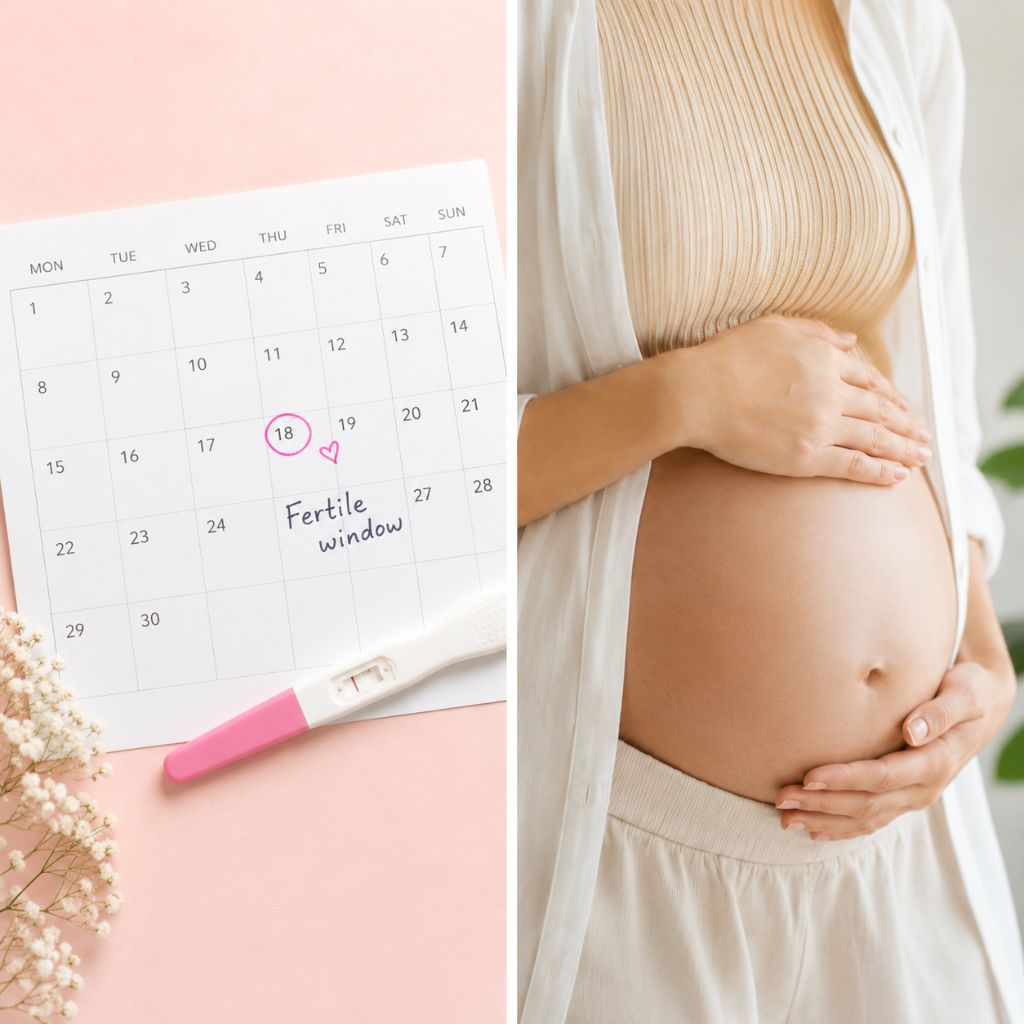
Yes, you can get pregnant even if you do not notice any ovulation symptoms. For natural conception, ovulation still needs to happen, but the process does not always come with symptoms that you can feel or recognise.
This can be confusing when you are trying to conceive. You may expect a particular type of discharge, mild ovulation pain or another noticeable change and assume that pregnancy is unlikely if you do not see it.
That assumption is not necessarily correct.
Why You May Not Notice Ovulation
Ovulation is a hormonal and biological event, not a symptom that every woman experiences in the same way.
Some women notice several changes around their fertile days. Others notice very little. Even for the same woman, symptoms can vary between cycles.
Your daily routine can also make subtle changes easy to miss. A small change in cervical mucus, for example, may not be obvious unless you are actively monitoring it.
The absence of a symptom therefore tells you very little on its own about whether an egg has been released.
Can You Ovulate Without Feeling Anything?
Yes. Ovulation can occur without noticeable pain, discharge changes or other physical symptoms.
This is an important distinction if you are trying to understand your fertility. Ovulation symptoms are clues, not a requirement for ovulation.
Some commonly recognised changes include wetter or more slippery cervical mucus, mild pelvic discomfort, breast tenderness, changes in libido and a small rise in basal body temperature after ovulation.
However, none of these symptoms needs to be present for conception to be possible.
Does Ovulation Pain Mean You Are Definitely Ovulating?
Not necessarily.
Some women experience a brief pain or ache around the middle of their cycle, sometimes called mittelschmerz. It may occur around ovulation, but pelvic pain alone cannot confirm that an egg has been released.
There are also many possible causes of pelvic pain unrelated to ovulation.
This is why trying to identify ovulation solely by pain can be misleading. A woman who never experiences ovulation pain can still ovulate normally, while someone who experiences mid-cycle pain should not automatically assume that ovulation has definitely occurred.
How Can You Tell When You Are Fertile?
The fertile window is the period during which intercourse is most likely to result in pregnancy.
It is broader than a single “ovulation day” because sperm can survive for several days in the female reproductive tract under favourable conditions, while the egg remains available for a much shorter period after ovulation.
This means you do not necessarily need to identify the exact moment of ovulation to have a chance of conceiving.
If you are trying for a baby, paying attention to your cycle pattern and identifying your fertile days may be more useful than waiting for one specific symptom.
What Can Actually Help You Assess Ovulation?
Different methods provide different types of information. They should not all be treated as proof of ovulation.
| Method | What it can tell you | Important limitation |
| Cervical mucus | May indicate that you are approaching your fertile period | Changes are not always noticeable |
| Ovulation predictor kit | Detects an LH rise associated with approaching ovulation | An LH surge does not guarantee that ovulation occurred |
| Basal body temperature | A sustained rise can support that ovulation has already happened | The change generally occurs after ovulation |
| Ultrasound monitoring | Can allow a clinician to assess follicular development and ovulation | Usually used when there is a clinical reason for monitoring |
This distinction matters because “tracking ovulation” and “confirming ovulation” are not always the same thing.
Can You Get Pregnant Without Knowing You Ovulated?
Yes.
You may not know when ovulation happened and still conceive. In fact, many women do not experience a clear physical signal that tells them an egg has been released.
If intercourse takes place during the fertile window, sperm may still be present when ovulation occurs.
For someone trying to conceive, this is one reason it can be unhelpful to wait for ovulation pain or another obvious symptom before having intercourse.
What If Your Periods Are Regular but You Cannot Identify Ovulation?
Having regular periods can be reassuring, but the timing and regularity of bleeding alone cannot tell you everything about what is happening hormonally in every cycle.
If you have regular cycles but simply do not notice ovulation symptoms, there may be no reason to assume that you are not ovulating.
The situation is different if your periods are consistently very irregular, unusually infrequent or absent. In that case, an assessment may help identify whether ovulation is occurring regularly and whether hormonal or other reproductive factors need attention.
When Should You Talk to a Gynaecologist?
You do not usually need to see a fertility specialist simply because you cannot feel ovulation.
It is more appropriate to seek medical advice if you have irregular or absent periods, known PCOS or another hormonal condition, repeated difficulty identifying your fertile period, or difficulty conceiving despite regular attempts.
A gynaecologist can look at your menstrual history and symptoms and decide whether any testing or ovulation assessment is actually necessary.
Dr. Shilpa Bansal Agrawal is a consultant gynaecologist, obstetrician and fertility specialist at Harleys Cosmetic & Women’s Clinic in Andheri, Mumbai. Her practice includes fertility evaluation, menstrual health and the assessment of hormonal and reproductive concerns.
Frequently Asked Questions
Can you get pregnant if you do not feel ovulation?
Yes. Feeling ovulation is not necessary for pregnancy. Ovulation can occur without noticeable pain or other physical symptoms.
Can you ovulate without having egg white discharge?
Yes. Some women do not notice the typical clear, stretchy cervical mucus associated with the fertile period. Its absence does not by itself establish that ovulation has not occurred.
Can you get pregnant if you miss your ovulation day?
Yes. You do not necessarily have to have intercourse on the exact day of ovulation. Because sperm can survive for several days under suitable conditions, intercourse in the days leading up to ovulation can also result in pregnancy.
Does ovulation pain mean the egg has been released?
Not necessarily. Ovulation pain may occur around the time of ovulation, but pain alone cannot confirm that an egg has actually been released.
Can you have a period without ovulating?
Bleeding can occur in cycles where ovulation has not taken place. If your periods are repeatedly irregular or absent, a gynaecological assessment can help determine the underlying cause.
Should I worry if I never notice ovulation symptoms?
Not necessarily. Some women simply do not experience noticeable symptoms. If your periods are regular and you have no other concerns, the absence of symptoms alone does not mean that you have a fertility problem.