

Fibroids, especially those located within the uterine lining, can interfere with fertility by preventing embryo implantation, blocking fallopian tubes, or distorting the uterus. They may also increase the risk of miscarriage, preterm birth, and complications during pregnancy. Women trying to conceive or undergoing IVF should consult a fertility-focused gynaecologist to assess if treatment, such as myomectomy, is needed to improve pregnancy outcomes.
Introduction
Many women trying to conceive are surprised to find out that fibroids could be standing in their way. While these non-cancerous growths are common particularly among women in their 30s and 40s their presence can sometimes lead to complications in both natural conception and assisted reproductive treatments. For couples planning a family, understanding the connection between fibroids and fertility becomes crucial.
If you’ve been diagnosed with fibroids and are concerned about your ability to get pregnant or carry a pregnancy to term, you’re not alone. With the right support and a personalised plan, many women go on to have healthy pregnancies.
How Fibroids Develop and Who Is Affected
Fibroids, also known as uterine leiomyomas, are muscular growths that appear in or around the uterus. These growths vary in size from barely noticeable nodules to large masses that distort the uterine shape.
Women of reproductive age, particularly between 30 and 45, are most commonly affected. In India, the number of fibroid diagnoses has risen, in part due to better awareness and more women seeking fertility advice early on.
While fibroids are generally benign and many women may not experience any symptoms, they become a concern when:
- They cause heavy menstrual bleeding or pain
- Their location interferes with the uterine lining
- They grow rapidly or are found in women planning a pregnancy
The Different Types of Fibroids That Can Affect Reproduction
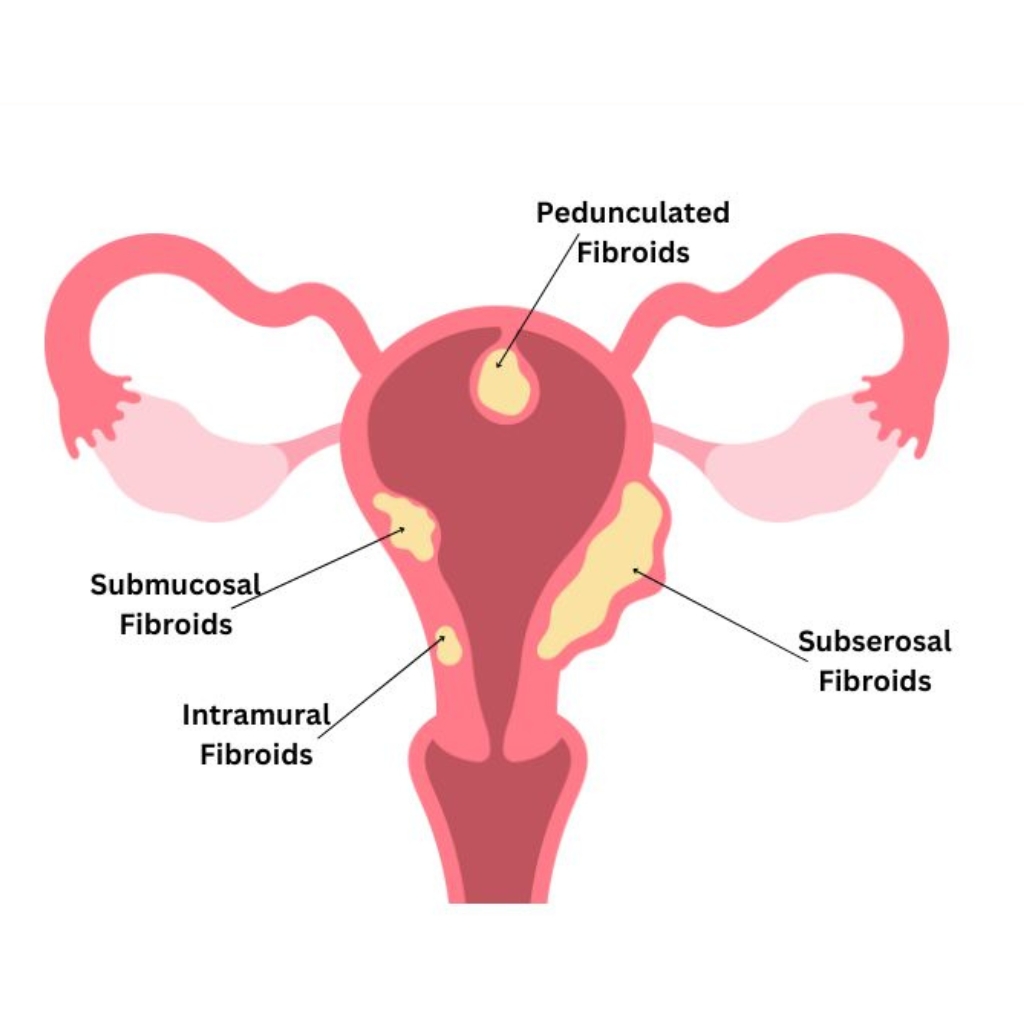
Fibroids are classified based on their location in or around the uterus. Some types are more likely to impact fertility than others.
- Submucosal fibroids: These grow just beneath the lining of the uterus (endometrium) and can interfere with implantation. They’re most commonly linked with fertility issues and miscarriage.
- Intramural fibroids: Found within the muscular wall of the uterus, they may disrupt the shape of the uterus or affect blood supply to the endometrium.
- Subserosal fibroids: Located on the outer surface of the uterus, these typically do not affect fertility unless they grow large enough to compress adjacent reproductive structures.
- Cervical fibroids: Rare but may complicate the passage of sperm or interfere with childbirth.
It’s not just the type, but also the size and number of fibroids that influence outcomes. A submucosal fibroid of 2 cm may pose a greater risk to fertility than a 6 cm subserosal one.
How Fibroids Affect Fertility & Conception
Fibroids can influence fertility in several ways:
- Implantation failure: Submucosal fibroids can distort the uterine cavity, making it difficult for an embryo to implant.
- Tubal blockage: Large fibroids near the fallopian tubes can prevent the egg from meeting sperm.
- Uterine lining disruption: Fibroids that invade the endometrium reduce the quality of the environment needed for pregnancy.
- Inflammation and altered blood flow: Fibroids may create a local inflammatory response, leading to poor embryo survival or failed implantation.
- Hormonal imbalance: Though less common, fibroids can affect oestrogen and progesterone levels, impacting ovulation and cycle regularity.
Contrary to some misconceptions, fibroids do not affect egg quality, but their physical presence in the uterus can make conception more difficult.
Pregnancy Complications Due to Fibroids
Even after conception, fibroids can pose challenges during pregnancy:
- Miscarriage: Especially during the first trimester, submucosal and large intramural fibroids raise miscarriage risk.
- Placental abruption: Fibroids may cause the placenta to detach prematurely, leading to bleeding and preterm labour.
- Preterm birth: Pressure on the uterus or placenta due to fibroids can trigger early contractions.
- Fetal growth restriction: Limited space in the uterus may hinder the baby’s growth.
- Abnormal fetal position: Fibroids may limit foetal movement, leading to breech or transverse lie.
- Increased caesarean delivery rates: Due to complications or blocked birth canal.
Close monitoring by an experienced gynaecologist in Mumbai is essential if fibroids are discovered during pregnancy.
IVF Success with Fibroids – What to Know
Fibroids may reduce the effectiveness of assisted reproductive treatments like IVF. Here’s how:
- Reduced implantation rates: Submucosal and some intramural fibroids lower the chance of embryos embedding successfully.
- Higher miscarriage risk: Implantations in distorted areas of the uterus are less stable.
- Fibroids over 3 cm within the uterine cavity are often removed before IVF.
- Success after myomectomy: Studies show IVF success improves significantly post-fibroid removal, particularly when the cavity is restored.
Many Mumbai-based fertility centres suggest evaluating and treating fibroids before beginning IVF cycles.
When Should You Remove Fibroids Before Trying to Conceive?
Surgical removal isn’t always necessary. It depends on:
- Size: Fibroids larger than 5 cm, especially if in the uterine cavity, often need removal.
- Symptoms: Heavy bleeding or pain is a red flag.
- Location: Submucosal or intramural fibroids near the cavity are prioritised.
- Failed IVF cycles: If implantation repeatedly fails, fibroids are examined closely.
Your gynaecologist will assess your uterus using ultrasound or MRI before recommending a course of action.
Treatment Options That Preserve Fertility
Treating fibroids with future pregnancy in mind requires careful planning.
- Medication
- May reduce symptoms but has limited impact on fibroid size.
- GnRH analogues may be used pre-surgery but are not ideal for long-term use.
- May reduce symptoms but has limited impact on fibroid size.
- Myomectomy
- Preferred treatment for women wanting to conceive.
- Can be done through:
- Hysteroscopy (for submucosal fibroids)
- Laparoscopy (keyhole)
- Laparotomy (open surgery)
- Hysteroscopy (for submucosal fibroids)
- Preserves uterus and improves fertility outcomes
- Preferred treatment for women wanting to conceive.
- Uterine Artery Embolisation (UAE)
- Reduces fibroid size by cutting off blood supply
- Not typically recommended for women planning pregnancy
- Reduces fibroid size by cutting off blood supply
- Regular Monitoring
- For small, symptom-free fibroids, surveillance may be advised
Clinics like Harleys Women’s Clinic offer advanced minimally invasive options to help women retain fertility while addressing fibroid symptoms.
How to Plan Pregnancy if You Have Fibroids
Here’s what you should consider:
- Start early: Fertility naturally declines with age. Planning ahead helps.
- Work with a fertility-aware gynaecologist: Choose a doctor with expertise in both fibroid management and reproductive medicine.
- Monitor regularly: Ultrasounds every 6–12 months to track fibroid growth.
- Discuss surgical options openly: Don’t delay treatment if recommended.
- Plan emotional support: Fertility journeys can be stressful. Having a support system matters.
Choosing the Right Gynaecologist in Mumbai for Fibroid Management
Finding the best gynecologist for fibroids in Mumbai requires focusing on a few key elements:
- Fertility-first approach: Choose someone who considers reproductive goals when suggesting treatments.
- Surgical experience: Especially in hysteroscopic and laparoscopic fibroid removal.
- Holistic consultation: Where fibroid treatment is paired with fertility counselling.
- Reputation and patient trust: Clinics like Harleys Women’s Clinic, led by Dr. Shilpa, are known for supporting women through complex fertility journeys with compassion and clarity.
FAQs
Q1. Can fibroids stop me from getting pregnant?
Answer: Yes, certain types of fibroids can block the fallopian tubes or interfere with implantation, making conception difficult.
Q2. Is IVF possible if I have fibroids?
Answer: Yes, but success may be reduced if fibroids distort the uterus. Removing fibroids before IVF is often advised.
Q3. Do all fibroids need to be removed before pregnancy?
Answer: Not all. Only fibroids that impact the uterine cavity, cause symptoms, or interfere with conception are usually treated.
Q4. Can fibroids cause miscarriage?
Answer: Yes. Submucosal and large intramural fibroids increase miscarriage risk, especially in early pregnancy.
Q5. How are fibroids treated without affecting fertility?
Answer: Myomectomy is the preferred treatment. It removes fibroids while preserving the uterus.
Q6. What is the success rate of pregnancy after fibroid removal?
Answer: Success rates improve significantly after removal, particularly if fibroids were the main cause of infertility.
Q7. When should I see a gynaecologist for fibroids?
Answer: If you’re experiencing pain, irregular periods, or difficulty conceiving, consult a specialist without delay.
Q8. Is there a fertility-friendly gynaecologist in Mumbai?
Answer: Yes. Clinics such as Harleys Women’s Clinic, headed by Dr. Shilpa, provide comprehensive fibroid and fertility care.
Final Thoughts
Fibroids can challenge your fertility journey, but they don’t have to define it. With expert support, accurate diagnosis, and the right treatment plan, pregnancy is still very much possible. Women in Mumbai have access to some of the finest fertility-focused gynaecologists who combine medical precision with compassionate care.
Early evaluation and personalised guidance are the first steps towards a healthy pregnancy even with fibroids.