

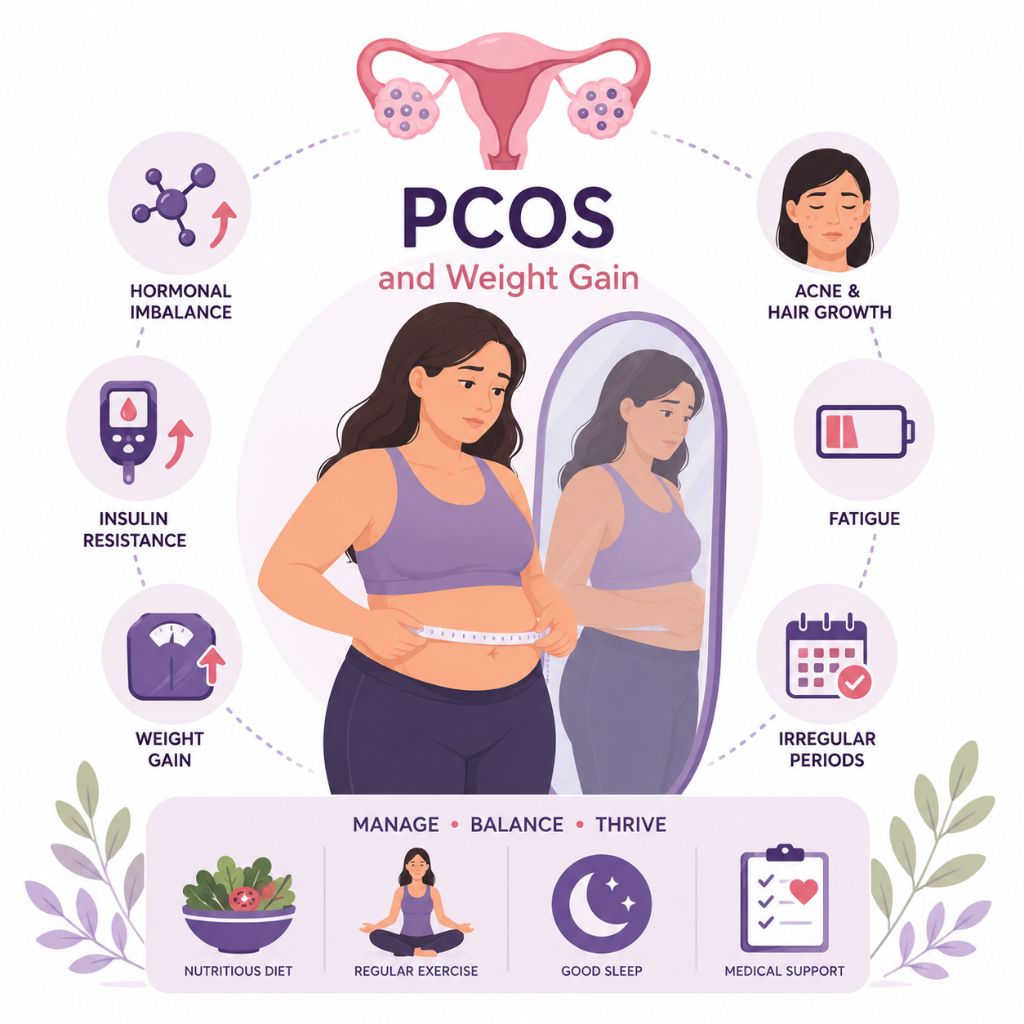
PCOS-related weight gain is commonly caused by insulin resistance and hormonal imbalance. A healthy diet, regular exercise, stress management, quality sleep, and personalized medical care can help improve weight, regulate menstrual cycles, and reduce PCOS symptoms. Dr. Shilpa Agarwal at Harley’s Women Clinic in Andheri provides comprehensive PCOS diagnosis and individualized treatment plans.
Weight gain is a common symptom of Polycystic Ovary Syndrome (PCOS) due to hormonal imbalance and insulin resistance. A combination of a healthy diet, regular exercise, stress management, quality sleep, and personalized medical care can help women manage their weight effectively. If you’re looking for a PCOS doctor in Andheri, Dr. Shilpa Agarwal at Harley’s Women Clinic offers comprehensive PCOS diagnosis and personalized treatment plans.
Polycystic Ovary Syndrome (PCOS) is one of the most common hormonal disorders affecting women of reproductive age. Along with irregular periods, acne, excess hair growth, and fertility concerns, many women also struggle with unexplained weight gain. Losing weight with PCOS can feel frustrating because the condition affects the body’s metabolism and insulin response.
The good news is that sustainable lifestyle changes and early medical intervention can significantly improve symptoms and overall health. Whether you’ve recently been diagnosed or have been managing PCOS for years, understanding the connection between PCOS and weight gain is the first step toward long-term wellness.
Why Does PCOS Cause Weight Gain?
Women with PCOS are more likely to develop insulin resistance, a condition where the body’s cells do not respond effectively to insulin. As a result, the body produces more insulin, which can encourage fat storage and increase hunger.
Other factors contributing to weight gain include:
- Hormonal imbalance
- Elevated androgen (male hormone) levels
- Slower metabolism
- Increased appetite and cravings
- Reduced physical activity due to fatigue
- Poor sleep quality
- Chronic stress
Even a modest weight loss of 5–10% of body weight can improve menstrual regularity, hormone balance, and fertility in many women with PCOS.
Signs That Weight Gain May Be Linked to PCOS
Besides weight gain, women with PCOS may experience:
- Irregular or missed periods
- Acne
- Excess facial or body hair
- Hair thinning
- Difficulty conceiving
- Dark patches of skin (Acanthosis Nigricans)
- Fatigue
- Mood changes
If you notice these symptoms, consulting a qualified PCOS doctor in Andheri can help with early diagnosis and treatment.
Healthy Lifestyle Changes That Support PCOS Weight Loss
1. Follow a Balanced Diet
There is no single “PCOS diet,” but healthy eating habits can help improve insulin sensitivity and support weight management.
Focus on:
- High-fiber vegetables
- Lean protein
- Whole grains
- Healthy fats
- Fresh fruits in moderation
- Plenty of water
Limit:
- Sugary beverages
- Refined carbohydrates
- Processed foods
- Excess sweets
- Fried foods
Eating balanced meals at regular intervals can also help stabilize blood sugar levels.
2. Stay Physically Active
Exercise improves insulin sensitivity and supports healthy hormone balance.
Aim for:
- 150 minutes of moderate exercise each week
- Strength training 2–3 times weekly
- Walking
- Cycling
- Swimming
- Yoga
- Pilates
Consistency is more important than intensity.
3. Prioritize Quality Sleep
Poor sleep can worsen insulin resistance and increase hunger hormones.
Try to:
- Sleep 7–9 hours every night
- Maintain a regular sleep schedule
- Reduce screen time before bed
- Create a relaxing bedtime routine
4. Manage Stress Effectively
Long-term stress raises cortisol levels, which may contribute to weight gain and hormonal imbalance.
Helpful stress-management techniques include:
- Meditation
- Deep breathing exercises
- Yoga
- Mindfulness
- Regular physical activity
- Spending time outdoors
Medical Treatment for PCOS
Lifestyle changes are the foundation of PCOS management, but some women may also benefit from medical treatment.
Depending on your symptoms, your gynecologist may recommend:
- Hormonal medications
- Medicines to improve insulin sensitivity
- Ovulation-inducing medications for fertility
- Acne management
- Personalized nutrition and lifestyle counseling
Treatment should always be tailored to your health goals and future pregnancy plans.
When Should You See a PCOS Specialist?
You should consult a healthcare professional if you experience:
- Persistent weight gain
- Irregular periods
- Difficulty conceiving
- Excess facial hair
- Severe acne
- Hair loss
- Symptoms affecting your daily life
If you’re searching for the Best PCOS doctor near me or an experienced PCOS doctor in Andheri, Dr. Shilpa Agarwal at Harley’s Women Clinic provides comprehensive evaluation, hormonal assessment, fertility guidance, and evidence-based PCOS treatment.
Taking the First Step Toward Managing PCOS and Weight Gain
Managing PCOS-related weight gain takes patience and consistency, but lasting improvements are possible with the right approach. A balanced diet, regular exercise, quality sleep, stress management, and expert medical guidance can help improve hormonal health and reduce long-term health risks.
If you’re looking for the Best PCOS doctor near me, PCOS Treatment in Andheri, or an experienced gynaecologist in Andheri, Dr. Shilpa Agarwal at Harley’s Women Clinic offers personalized PCOS care to help you achieve better hormonal balance, improved fertility, and sustainable weight management.
Frequently Asked Questions
Can losing weight improve PCOS?
Yes. Even a modest weight loss can improve hormone balance, menstrual regularity, insulin sensitivity, and fertility.
Is PCOS weight gain reversible?
Many women successfully manage PCOS-related weight through healthy eating, exercise, medical treatment, and long-term lifestyle changes.
Can I lose weight without medication?
Some women achieve good results with lifestyle changes alone, while others may require medication depending on the severity of their symptoms.