

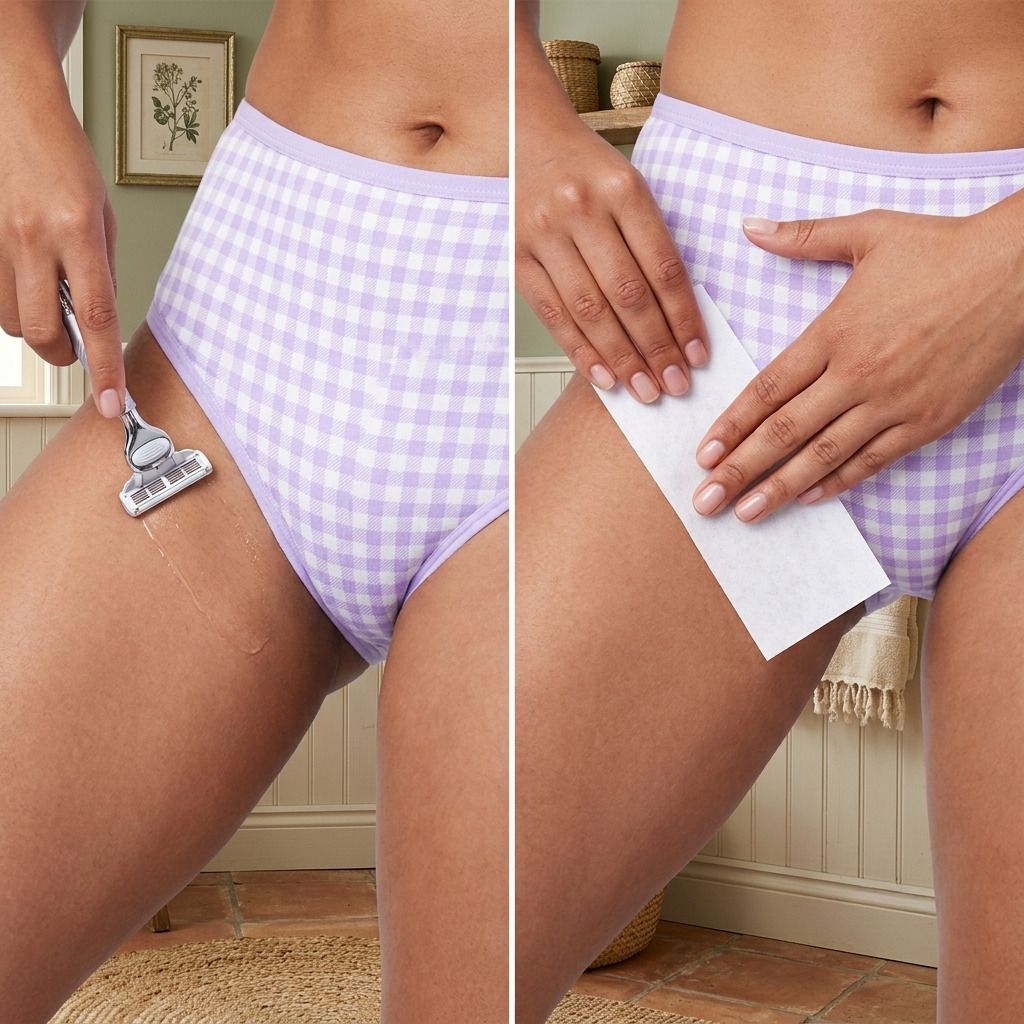
Choosing between shaving and waxing for the bikini area is largely a matter of personal preference. However, if you are concerned about irritation, ingrown hairs or vaginal health, it is reasonable to wonder whether one method is safer than the other.
The first thing to know is that removing pubic hair is not necessary for vaginal hygiene. Pubic hair is normal, and keeping it does not mean that you have poor hygiene.
Both shaving and waxing can be safe when done carefully, but they can also irritate the delicate skin around the vulva. The better option depends on your skin, how it responds to hair removal and what you find most comfortable.
Shaving vs Waxing for the Bikini Area: What Is the Difference?
Shaving cuts the hair at or close to the surface of the skin. It is quick, relatively inexpensive and allows you to remove as much or as little hair as you prefer.
Waxing removes hair from the root. Because the hair needs to grow back before it becomes visible again, the results generally last longer than shaving.
The difference is not simply about how long the skin stays smooth. Each method can affect the skin differently.
Shaving may cause razor burn, small cuts, itching or ingrown hairs. Waxing can cause temporary redness, tenderness, irritation and sometimes ingrown hairs as well.
Is Shaving or Waxing Better for Vaginal Health?
Neither shaving nor waxing is necessary to maintain vaginal health.
It is also important to distinguish between the vagina and the vulva. The vagina is the internal muscular canal, while the vulva refers to the external genital area. Most hair removal takes place around the bikini line and vulva, not inside the vagina.
Removing pubic hair does not make the vagina cleaner or protect it from vaginal infections. In fact, repeatedly irritating or damaging the skin around the vulva may cause discomfort.
For this reason, the question is less about which method is “better for vaginal health” and more about which method your skin tolerates comfortably.
When Shaving May Be the Better Option
Shaving can be a practical choice if you want a quick method and prefer to control exactly how much hair you remove.
However, the skin around the bikini area can be sensitive. A blunt or unclean razor, shaving too closely or repeatedly going over the same area can increase the chance of irritation and small cuts.
Some people also develop ingrown hairs, where a hair curls back into the skin instead of growing normally. This can result in small, uncomfortable bumps.
If you choose shaving, avoid shaving skin that is already irritated, scratched or inflamed. Using clean equipment and avoiding aggressive rubbing afterwards can also help reduce irritation.
When Waxing May Be the Better Option
Waxing may appeal to people who prefer longer-lasting results and do not want to shave frequently.
However, waxing is not necessarily gentler on sensitive skin. The process can temporarily cause redness, tenderness or irritation. Hair removal from the root can also contribute to ingrown hairs in some people.
If your skin is already irritated, broken or inflamed, waxing should be avoided until it has settled.
It is also important to consider hygiene. Waxing should be performed using clean equipment and appropriate practices, particularly when dealing with sensitive areas.
How Can You Reduce Irritation After Bikini Hair Removal?
Whichever method you choose, looking after the skin afterwards is important.
Avoid repeatedly touching or rubbing the area, particularly if it feels sore. Tight clothing may also make irritated skin feel more uncomfortable, so comfortable, breathable underwear can be preferable immediately afterwards.
Avoid harsh scrubs, strongly fragranced products and anything that causes burning or stinging.
If you regularly develop ingrown hairs or irritation after hair removal, changing your technique or discussing the problem with a gynaecologist or dermatologist may be more helpful than simply switching between shaving and waxing.
Does Pubic Hair Affect Vaginal Hygiene?
No. Pubic hair is a normal part of the body and does not mean that the genital area is unclean.
There is also no medical requirement to remove pubic hair before seeing a gynaecologist.
For general intimate hygiene, the external area can be gently cleaned without trying to remove all pubic hair. The vagina itself does not need internal cleansing.
If you notice persistent itching, unusual discharge, a strong change in odour or other symptoms, hair removal is not the solution. These symptoms may have other causes and may need medical assessment.
When Should You See a Gynaecologist?
A small amount of temporary redness after shaving or waxing can happen. However, persistent or worsening symptoms should not simply be assumed to be a normal reaction to hair removal.
Consider speaking to a gynaecologist if you develop significant pain, swelling, persistent redness, pus, recurrent boils or bumps, severe itching, unusual discharge or fever.
Dr. Shilpa Bansal Agrawal, Consultant Gynaecologist, Obstetrician and Fertility Specialist at Harleys Cosmetic & Women’s Clinic in Andheri, Mumbai, can assess concerns involving vulval discomfort, recurrent irritation and other women’s health problems and help determine whether the symptoms are related to hair removal or another condition.
Which Hair Removal Method Should You Choose for Your Skin?
There is no single hair removal method that is right for every woman.
If shaving leaves you with frequent razor burn or ingrown hairs, waxing may not necessarily solve the problem. Likewise, if waxing repeatedly causes redness or irritation, shaving may be more comfortable.
You can also choose not to remove pubic hair at all. It is a personal grooming decision, not a requirement for good vaginal health.
The most useful approach is to pay attention to how your own skin responds. If a particular method repeatedly causes irritation, painful bumps or inflammation, it is worth changing your approach rather than continuing to tolerate the problem.
A Personal Choice, Not a Health Requirement
There is no medical need to remove pubic hair simply to keep the vagina healthy. If you prefer shaving or waxing, focus on a method that your skin tolerates well and avoid removing hair from irritated or damaged skin.
If bumps, irritation, pain or other symptoms keep returning despite changing your hair removal routine, it is worth getting them checked rather than assuming they are simply part of grooming.
For women in Andheri and nearby areas who have concerns about vulval health, intimate discomfort or other gynaecological symptoms, a consultation with Dr. Shilpa Bansal Agrawal at Harleys Cosmetic & Women’s Clinic can help identify the underlying cause and provide appropriate guidance
Frequently Asked Questions
Is shaving the bikini area safe?
For most people, shaving can be safe when performed carefully. However, it can cause razor burn, cuts, irritation and ingrown hairs, particularly on sensitive skin.
Can shaving cause ingrown hairs?
Yes. Shaving can contribute to ingrown hairs when hair grows back into the skin. This may cause small bumps, irritation or discomfort.
Is waxing safe for sensitive skin?
Waxing can irritate sensitive skin and may cause temporary redness or tenderness. If the skin is already irritated or broken, it is better to allow it to recover before waxing.
Does removing pubic hair prevent infections?
No. Removing pubic hair is not necessary to prevent vaginal infections. Pubic hair is normal and does not mean that the area is unhygienic.
Which is better for the bikini area, shaving or waxing?
Neither is universally better. Shaving may be more convenient for some people, while others prefer the longer-lasting results of waxing. Your skin sensitivity, tendency to develop ingrown hairs and personal preference are important factors..