

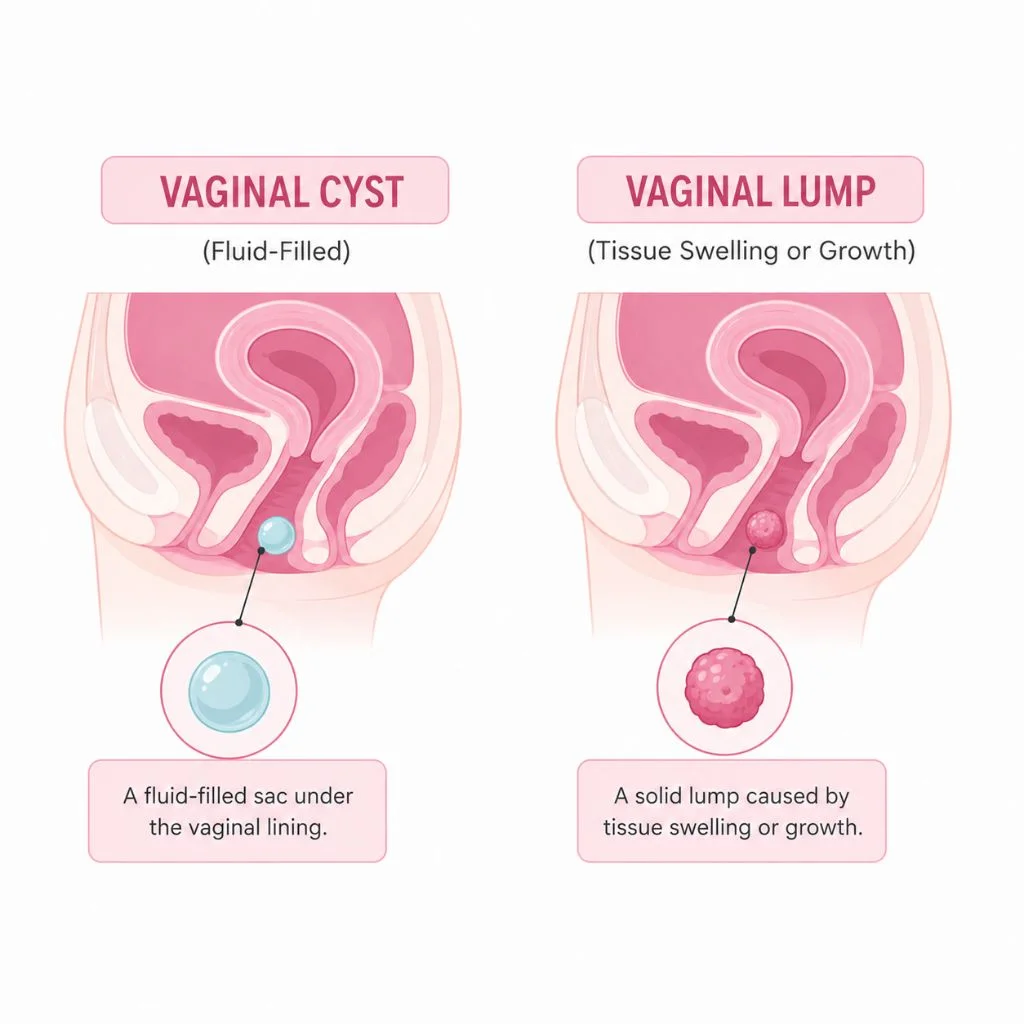
Discovering a lump or swelling in the vaginal area can be worrying. However, not all vaginal lumps are serious, and many are caused by benign (non-cancerous) conditions such as vaginal cysts. These fluid-filled sacs can develop within the vaginal tissue or nearby glands and may cause discomfort, swelling, or no symptoms at all.
Understanding the different types of vaginal cysts, their symptoms, causes, and treatment options can help women make informed decisions about their health. As a gynaecologist in Mumbai, Dr. Shilpa frequently evaluates women who are concerned about newly discovered vaginal lumps and swelling. Early assessment is important because some vaginal lumps may require medical evaluation to determine the underlying cause and appropriate management.
What Are Vaginal Cysts and Vaginal Lumps?
Vaginal cysts are enclosed sacs that develop within or around the vaginal wall and are often filled with fluid or semi-solid material. They are generally benign and may vary in size.
The term vaginal lumps is broader and refers to any localised swelling, bump, or growth in the vaginal area. While many vaginal lumps are cysts, others may be caused by skin conditions, infections, benign vaginal growths, or, less commonly, more serious conditions.
Although many vaginal cysts are harmless, a professional assessment by a gynaecologist is important to establish an accurate diagnosis and determine whether treatment is needed.
Common Types of Vaginal Cysts
Bartholin Cysts
A Bartholin cyst develops when the Bartholin gland, located on either side of the vaginal opening, becomes blocked. This causes fluid to accumulate, resulting in a fluid-filled cyst. Small cysts may be painless, while larger ones can cause discomfort during walking, sitting, or sexual activity.
Inclusion Cysts
Inclusion cysts are among the most common vaginal wall cysts. They may develop following childbirth, surgical procedures, or minor injury to vaginal tissue. These cysts are typically small and usually do not cause significant symptoms.
Gartner Duct Cysts
Gartner duct cysts arise from remnants of embryonic structures present during development. They are usually found along the vaginal wall and may be detected during a routine pelvic examination.
Other Benign Vaginal Lumps
Other non-cancerous vaginal lumps may include small cysts originating from blocked glands, benign tissue growths, or localised areas of swelling. While these conditions are often harmless, medical evaluation is recommended if a new lump develops.
Symptoms of Vaginal Cysts and Lumps
The symptoms of vaginal cysts vary depending on their type, size, and location. Some women may not notice any symptoms, while others experience discomfort.
Common vaginal cyst symptoms include:
- A noticeable lump or vaginal swelling
- A feeling of pressure in the vaginal area
- Discomfort when sitting or walking
- Pain during sexual intercourse
- Tenderness or soreness
- Redness or signs of infection if the cyst becomes inflamed
A Bartholin cyst that becomes infected may develop into an abscess, causing significant pain, swelling, and sometimes fever.
What Causes Vaginal Cysts?
Several factors can contribute to the development of vaginal cysts.
One of the most common causes is a blocked gland, which prevents normal fluid drainage and leads to cyst formation. This is often seen with Bartholin gland cysts.
Minor trauma to the vaginal area, including injuries during childbirth or surgical procedures, can also lead to inclusion cysts. In some cases, inflammation or irritation of the surrounding tissue may contribute to the development of localised swelling.
Other factors may include congenital abnormalities, infection, or changes within the vaginal tissue over time. While most cysts are benign, any persistent or unexplained lump should be assessed by a healthcare professional.
When Should You Consult a Gynaecologist?
While many vaginal cysts do not require urgent treatment, certain symptoms warrant medical attention.
You should consult a gynaecologist if:
- A new vaginal lump develops
- The lump increases in size
- You experience pain or persistent discomfort
- There are signs of infection, such as redness, warmth, or discharge
- The swelling interferes with daily activities
- You are unsure about the cause of the lump
Women over the age of 40 who notice a new swelling near the Bartholin gland should arrange a medical evaluation to ensure an accurate diagnosis and appropriate care.
A consultation with an experienced gynaecologist in Mumbai, such as Dr. Shilpa at Harleys Women’s Clinic, can help ensure accurate diagnosis and appropriate care.
Diagnosis and Treatment Options
Diagnosis begins with a detailed medical history and discussion of symptoms. A physical examination and pelvic examination allow the doctor to assess the size, location, and characteristics of the lump. During a consultation, Dr. Shilpa will review your symptoms, medical history, and examination findings to determine the most appropriate diagnosis and treatment approach.
In many cases, no additional tests are required. However, further investigations may be recommended if the diagnosis is unclear or if there are unusual features.
Treatment depends on the type of cyst, its symptoms, and whether infection is present.
| Type | Common Features | Treatment Approach |
| Bartholin Cyst | Swelling near vaginal opening, may become painful | Observation, drainage, or minor procedure if symptomatic |
| Inclusion Cyst | Small, usually painless vaginal wall cyst | Monitoring unless causing symptoms |
| Gartner Duct Cyst | Vaginal wall lump, often discovered incidentally | Observation or surgical removal if problematic |
| Infected Cyst/Abscess | Pain, redness, tenderness, swelling | Drainage and appropriate medical treatment |
Small, symptom-free cysts may simply be monitored. If a cyst becomes painful, infected, or enlarges significantly, drainage procedures or surgical management may be necessary. Your doctor will recommend the most suitable diagnosis and treatment plan based on individual circumstances.
Prevention and Vaginal Health Tips
Although not all vaginal cysts can be prevented, maintaining good vaginal health and seeking timely care for symptoms may reduce complications.
- Practise good intimate hygiene
- Avoid unnecessary irritation of the vaginal area
- Attend routine gynaecological check-ups
- Seek medical advice for persistent swelling or discomfort
- Follow recommended postpartum and post-surgical care instructions
Preventive care plays an important role in supporting overall women’s reproductive health.
Understanding Vaginal Cysts and Knowing When to Seek Care
Vaginal cysts are common, usually benign conditions that can present as small lumps or areas of localised swelling. While many cause few or no symptoms, some may lead to discomfort, infection, or concerns about underlying health issues. Understanding the causes of vaginal lumps, recognising vaginal cyst symptoms, and knowing when to seek medical assessment are important steps in protecting your health.
Early diagnosis allows appropriate treatment and reassurance when needed, helping women maintain good vaginal health and overall wellbeing.
If you notice a new vaginal lump, swelling, or persistent discomfort, seeking a professional medical assessment can help identify the cause and guide appropriate treatment.
Frequently Asked Questions
Q1. Are vaginal cysts common?
Answer: Yes. Vaginal cysts are relatively common and are often discovered during routine examinations or when a woman notices a lump herself.
Q2. Can vaginal cysts disappear without treatment?
Answer: Some small cysts may remain stable or resolve on their own. Others may persist and require monitoring or treatment if symptoms develop.
Q3. Are all vaginal lumps cysts?
Answer: No. Vaginal lumps can have various causes, including cysts, infections, benign growths, or other conditions. A medical evaluation is important for an accurate diagnosis.
Q4. Can vaginal cysts come back?
Answer: Yes. Some cysts, particularly Bartholin cysts, can recur even after treatment. Regular follow-up may be advised in certain cases.
Q5. When should I seek medical advice?
Answer: You should seek medical advice if you notice a new lump, increasing vaginal swelling, pain, signs of infection, or any persistent change in the vaginal area.