


Pregnancy is a time of remarkable change, and one of the most important yet often overlooked parts of a healthy pregnancy is the cervix. A strong and healthy cervix helps keep your baby safely inside the uterus until the right time for delivery. However, in some pregnancies, the cervix may begin to shorten or open too early, increasing the risk of miscarriage or preterm birth.
In certain cases, a procedure called cervical cerclage can help support the pregnancy and improve outcomes. Understanding cervical health, recognizing risk factors, and seeking timely medical care can make a significant difference.
What Is the Cervix and Why Is It Important During Pregnancy?
The cervix is the lower, narrow part of the uterus that connects to the vagina. During most of pregnancy, it remains long, firm, and closed, helping protect the developing baby from infection and premature delivery.
As you approach full term, the cervix naturally softens, shortens, and opens to prepare for childbirth. If these changes happen too early, it may lead to pregnancy complications.
What Is Cervical Insufficiency?
Cervical insufficiency, also known as an incompetent cervix, occurs when the cervix weakens and begins to open before the baby is fully developed, often without painful contractions. This condition can increase the risk of second-trimester pregnancy loss or preterm birth.
Women may have a higher risk if they have:
- A previous second-trimester miscarriage
- A history of preterm birth
- Previous cervical surgery (such as LEEP or cone biopsy)
- Congenital cervical abnormalities
- Multiple pregnancy in selected cases
Many women with cervical insufficiency have no obvious symptoms, making regular antenatal check-ups especially important.
How Is Cervical Health Assessed?
One of the most reliable ways to assess cervical health during pregnancy is through a transvaginal ultrasound, which measures the length of the cervix.
A short cervix detected during pregnancy may indicate a higher risk of preterm birth. Women with a previous history of pregnancy loss or premature delivery are often advised to undergo cervical length screening as part of their antenatal care.
Early detection allows your obstetrician to recommend appropriate treatment before complications develop.
What Is Cervical Cerclage?
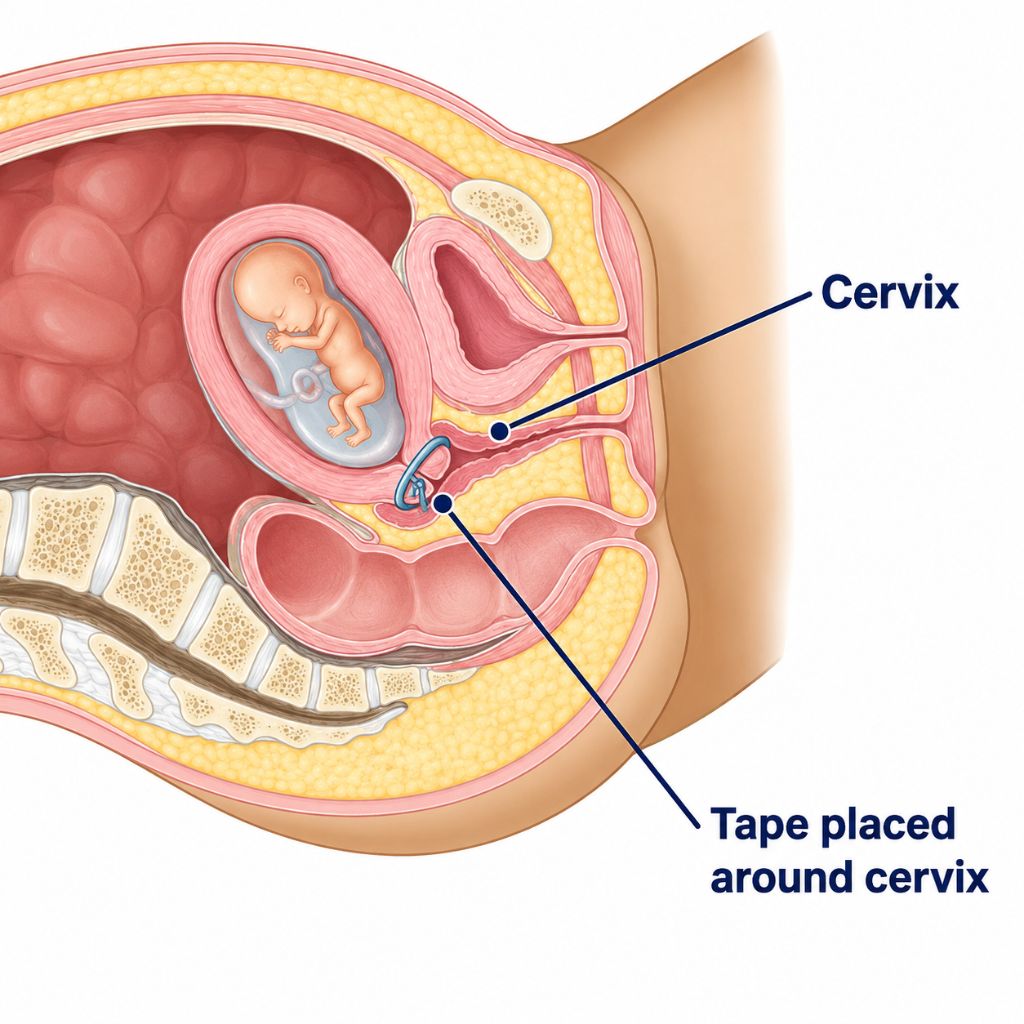
Cervical cerclage is a surgical procedure in which a strong stitch is placed around the cervix to help keep it closed during pregnancy. The goal is to provide additional support and reduce the risk of pregnancy loss or premature birth in carefully selected women.
The procedure is usually performed between 12 and 24 weeks of pregnancy, depending on the clinical situation. It is generally done under regional or general anaesthesia and often requires only a short hospital stay.
The stitch is typically removed around 36–37 weeks of pregnancy, or earlier if labour begins naturally.
Who May Need Cervical Cerclage?
Your doctor may recommend cervical cerclage if you have:
- A previous pregnancy loss due to cervical insufficiency
- A history of spontaneous preterm birth with a short cervix
- Significant cervical shortening detected on ultrasound
- Early cervical opening during pregnancy in selected emergency situations
Not every woman with a short cervix requires a cerclage. The decision depends on your medical history, ultrasound findings, and overall pregnancy risk. A personalised evaluation by an experienced obstetrician is essential.
Is Cervical Cerclage Safe?
For appropriately selected patients, cervical cerclage is considered a safe and well-established procedure. Like any surgery, it carries some risks, including infection, bleeding, rupture of membranes, or preterm contractions, although serious complications are uncommon.
Most women continue their pregnancy successfully after the procedure with regular follow-up and monitoring.
How Can You Maintain Good Cervical Health During Pregnancy?
While some cervical conditions cannot be prevented, healthy pregnancy care plays an important role in reducing complications.
Simple steps include:
- Attending all scheduled antenatal appointments
- Following recommended ultrasound scans
- Reporting vaginal bleeding, fluid leakage, or pelvic pressure promptly
- Managing infections without delay
- Following your doctor’s advice regarding activity and medications
Early diagnosis remains the best way to protect both mother and baby.
When Should You Consult a Gynaecologist?
Seek medical advice immediately if you experience:
- Vaginal bleeding
- Persistent pelvic pressure
- Leakage of fluid
- Regular contractions before 37 weeks
- Severe lower back pain
- Reduced fetal movements later in pregnancy
Prompt evaluation can help identify potential problems before they become emergencies.
Expert Pregnancy Care at Harley’s Cosmetic & Women’s Clinic
Every pregnancy is unique, and women with a history of miscarriage, preterm birth, or a short cervix often benefit from individualized care. At Harleys Cosmetic & Women’s Clinic in Andheri, Mumbai, Dr. Shilpa Bansal Agrawal, Consultant Gynaecologist, Obstetrician, and Fertility Specialist, provides comprehensive pregnancy care, including cervical length assessment, high-risk pregnancy management, and evidence-based treatment options such as cervical cerclage when indicated.
The focus is always on providing clear guidance, personalised treatment, and compassionate support throughout your pregnancy journey.
Protecting Your Pregnancy Through Early Cervical Care
Cervical health plays a vital role in maintaining a healthy pregnancy, especially for women with a history of miscarriage, preterm birth, or cervical insufficiency. Regular antenatal check-ups, timely cervical length assessment, and appropriate treatment, including cervical cerclage when recommended, can significantly improve pregnancy outcomes.
At Harley’s Cosmetic & Women’s Clinic in Andheri, Mumbai, Dr. Shilpa Bansal Agrawal, Consultant Gynaecologist, Obstetrician, and Fertility Specialist, offers personalised pregnancy care tailored to each woman’s unique needs. If you have concerns about cervical health, recurrent pregnancy loss, or a high-risk pregnancy, seeking expert guidance early can help ensure the best possible care for you and your baby.
Frequently Asked Questions
Q1. What is cervical cerclage, and why is it done?
Answer: Cervical cerclage is a procedure in which a strong stitch is placed around the cervix to help keep it closed during pregnancy. It is recommended for women at risk of cervical insufficiency or preterm birth, helping support the pregnancy until the baby is closer to full term.
Q2. How do I know if I have a short cervix during pregnancy?
Answer: A short cervix usually does not cause noticeable symptoms. It is most commonly diagnosed through a transvaginal ultrasound performed during routine antenatal care or in women with a history of pregnancy complications.
Q3. Is cervical cerclage safe for both mother and baby?
Answer: Yes. When performed for the right medical reasons, cervical cerclage is considered a safe and effective procedure. Although, like any surgery, it carries some risks, it has helped many women with cervical insufficiency carry their pregnancies longer and reduce the risk of preterm birth.
Q4. Can I have a normal delivery after cervical cerclage?
Answer: In many cases, yes. The cerclage stitch is usually removed between 36 and 37 weeks of pregnancy, allowing labour to progress naturally if there are no other obstetric indications for a caesarean section.
Q5. Does every woman with a short cervix need a cervical cerclage?
Answer: No. Treatment depends on your medical history, cervical length, and overall pregnancy risk. Some women may benefit from progesterone therapy or regular monitoring instead of cerclage. Your obstetrician will recommend the most appropriate treatment based on your individual situation.
Q6. When should I consult a gynaecologist about cervical health during pregnancy?
Answer: You should seek medical advice if you have a history of recurrent miscarriages, previous preterm birth, a diagnosed short cervix, vaginal bleeding, pelvic pressure, fluid leakage, or any unusual pregnancy symptoms. Early assessment can help identify potential concerns before they become serious.